
Toilet, Faucet and Sink Installation and Repair in Lansing
Repairs and new installs for toilets, faucets, sinks, showers and garbage disposals, and the rough-in plumbing behind a remodel.
Fixtures are the parts of the plumbing people use every day, so they are the parts that wear. We repair toilets and faucets, handle garbage disposals, install new fixtures, and do the rough-in plumbing for remodels. Whether a fixture is worth repairing usually comes down to the part that failed: washers, cartridges, flappers and fill valves can be replaced, while a cracked bowl or a corroded faucet body means a new fixture.
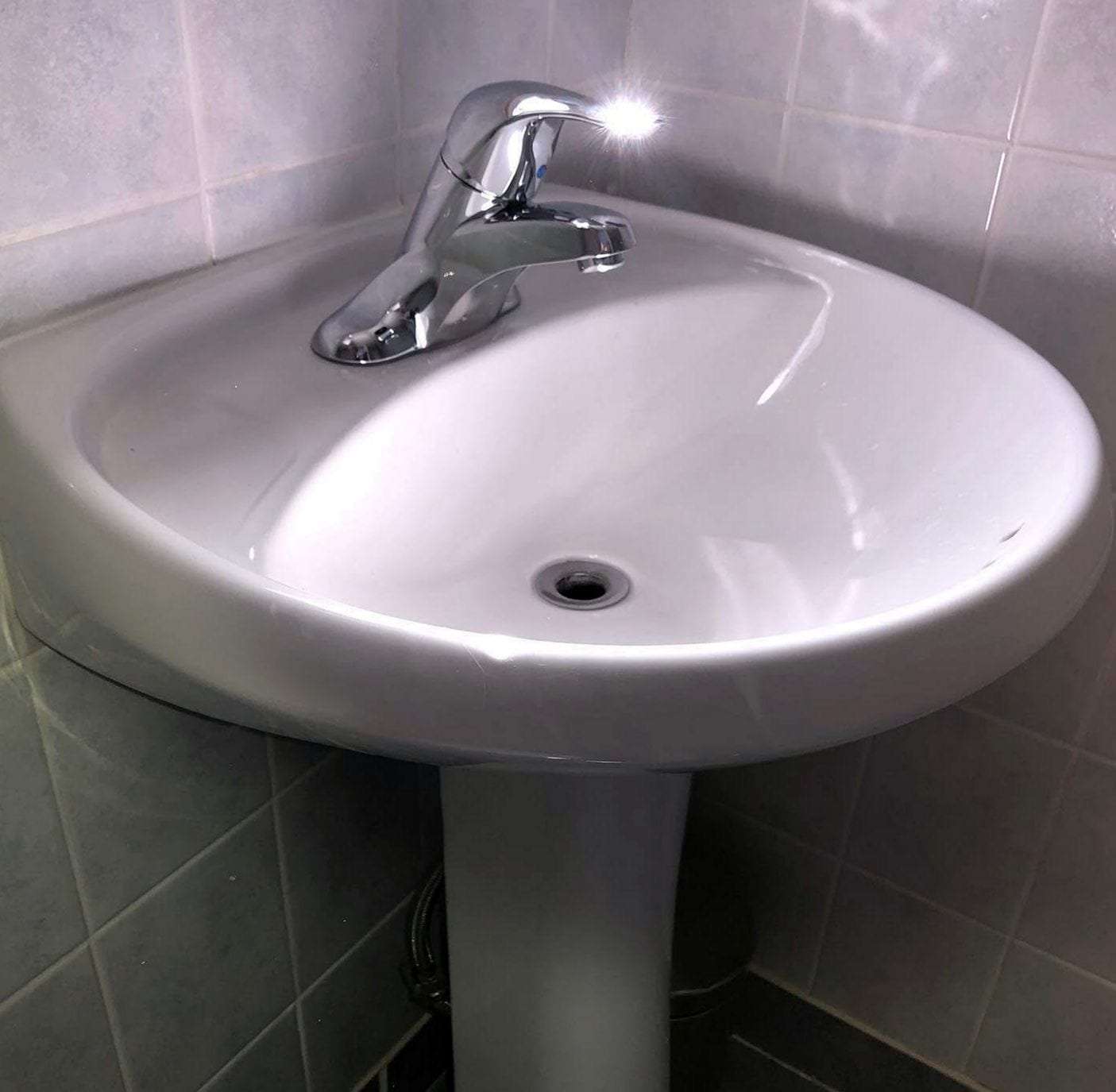
Fixture Problems and When Replacement Makes More Sense
Most fixture trouble starts small: a drip, a running tank, a slow drain or a new noise. A slow drain on its own is usually a clog in that fixture’s trap or branch line, a job for drain cleaning rather than a new fixture.
| Fixture | Common problems | Repair or replace guidance |
|---|---|---|
| Toilet | Runs on its own, flushes weakly, rocks, or leaks at the base | A running tank or weak flush is usually a flapper or fill valve; rocking or water at the base calls for a new wax ring. A cracked tank or bowl is replaced. |
| Kitchen faucet | Drips, leaks at the base or the sprayer hose, low flow | Low flow is often an aerator clogged with grit or scale; drips are a cartridge or O-ring repair where parts exist. A corroded body points to a new faucet. |
| Bathroom faucet | Drips, a loose handle, a pop-up drain that will not hold water | Cartridges and pop-up parts are usually repairable. A finish worn through or a leak from the faucet body is the reason to replace it. |
| Sink | Slow drain, leaking trap, chipped or cracked basin, a pedestal sink pulling away from the wall | Slow drains and trap leaks are repairs. A cracked basin, or a pedestal sink that has lost its wall support, means a new sink. |
| Shower | A dripping head, sudden temperature swings, a valve leaking behind the wall | Most valve cartridges can be changed from the front. Scalding swings when a toilet flushes point to a worn pressure-balancing cartridge, or to an older valve without one that needs replacing. |
| Garbage disposal | Hums without turning, jams, leaks from the bottom, drains slowly | A jam can often be freed with a hex wrench under the unit and its reset button. A leak from the unit’s body means its inner seals have failed, so the disposal is replaced. |
Gravity-Fed, Pressure-Assisted and Dual-Flush Toilets

When a toilet has to be replaced, the flush type is the main choice. Every new toilet sold in the United States uses 1.6 gallons per flush or less, but the three types differ in how they sound and how well they clear the bowl.
Measure before buying. Most toilets fit a drain 12 inches from the finished wall to the center of the floor bolts, but some older houses have a 10- or 14-inch rough-in, and a toilet made for the wrong one will not sit right.
Gravity-Fed
- Flush performance
- The weight of the water dropping from the tank does the work. Current designs clear the bowl well; some early low-flow models needed a second flush.
- Noise
- The quietest of the three: a soft rush, then the tank refilling.
- Water use
- 1.6 gallons per flush or less, and 1.28 or less for models with the WaterSense label.
Pressure-Assisted
- Flush performance
- A sealed tank inside the china uses the house’s water pressure for a forceful flush, good at clearing the bowl and carrying waste down long or older drain lines.
- Noise
- Loud: a sharp whoosh that carries through the house.
- Water use
- Usually 1.0 to 1.6 gallons per flush. It needs steady water pressure, and its pressure tank parts are specialized.
Dual-Flush
- Flush performance
- Two buttons: a light flush for liquids and a full flush for solids that works like a gravity flush.
- Noise
- About as quiet as a gravity-fed toilet.
- Water use
- The lowest overall: the light flush often uses about 0.8 to 1.1 gallons, so daily use falls below a single-flush toilet’s.
Low-Flow Fixtures and Worn Shutoff Valves
Do WaterSense toilets flush as well as older ones?
WaterSense is the EPA’s label for fixtures that use less water and still pass a performance test; a labeled toilet uses 1.28 gallons per flush or less. In an older house with a long, shallow-sloped run to the main sewer, a plumber may still lean toward a model with a strong flush.
Will a low-flow shower head or faucet feel weak?
A WaterSense shower head flows 2.0 gallons per minute or less, and a labeled bathroom faucet 1.5 or less, against federal limits of 2.5 and 2.2. If the flow drops right after a fixture change, the usual cause is grit in the new aerator or screen, loosened when the water was shut off, or a supply valve left partly closed.
Should the shutoff valves be replaced along with the fixture?
Often, yes, if they are old. Multi-turn valves under sinks and toilets tend to seize, or drip at the stem once they are turned after years in one position. Changing a worn valve while the water is already off is simpler than dealing with it when it fails.
What should I do if a shutoff valve will not turn?
Do not force it with a wrench: an old stem can snap and leave the water running. Close the main shutoff instead and have the valve replaced. A valve that drips at the stem after being turned may stop with a gentle snug of its packing nut; if not, it needs replacing too.
Rough-In Plumbing for Bathroom and Kitchen Remodels
In a remodel, the plumbing goes in twice. The rough-in comes first, while the walls and floor are open: drain and vent lines, supply lines, the shower valve body and the stub-outs where each fixture will connect. The fixtures go in last, after the drywall, tile and cabinets.
Rough-in depends on measurements that are hard to change later: the toilet drain’s distance from the finished wall, the shower valve’s depth for the tile, the sink drain’s height for the vanity. Moving a toilet or adding a bathroom also means new drain and vent lines, and in a basement that can mean opening the concrete floor. This work usually needs a permit and an inspection before the walls are closed.
Shower Heads, Tub Spouts and Laundry Tub Faucets
Small swaps have details of their own. A tub spout has to match its pipe, threaded or slip-on, or the diverter leaks while the shower runs. A shower head that leaks at the arm usually needs fresh thread tape or a new washer, not a new arm. A laundry tub faucet with a hose thread needs a vacuum breaker, so water from a hose left in the tub cannot be drawn back into the house supply.


Getting the Room Ready for a Fixture Install
- Empty the cabinet under the sink so the valves and the drain can be reached.
- Find the shutoff valves under the sink or behind the toilet, and the main shutoff in case one of them will not close.
- Keep the new fixture in its box with its manual and parts bag.
- For a new faucet, check that the number of holes in the sink or countertop matches the faucet’s box.
- For a garbage disposal, look for an outlet or a wall switch wired to the cabinet; without one, the wiring has to be added first.
- Move towels, cleaning products and anything breakable out of the room.
Line Up the Toilet, Faucet or Sink Work
Name the fixture and say whether the new one is already bought; for a leak that will not stop at the valve, call instead.