
Water Heater Repair and Replacement in Lansing
Repairs, replacement and sizing for tank and tankless water heaters, gas or electric, in homes, rentals and small shops.
A water heater rarely fails all at once. It runs out of hot water sooner, starts to rumble, or leaves a damp ring on the floor, and the question becomes whether a part can fix it or the tank is done. We replace water heaters for homes, rental units and small shops in and around Lansing, and the right size and type are worth settling before the old one comes out.
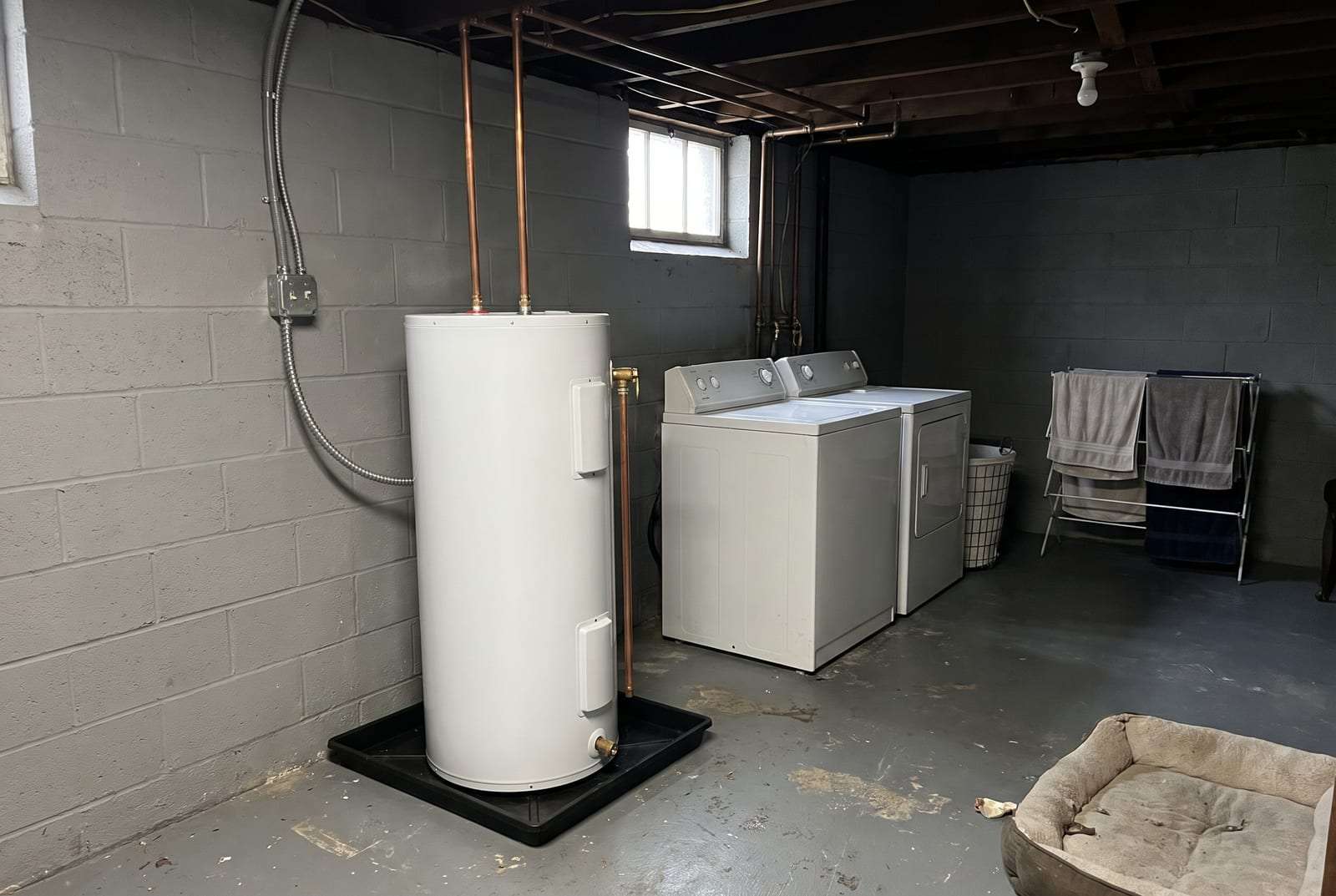
Signs a Water Heater Is Near Replacement
One of these on its own can be a repair. Two or three together, on a tank more than about ten years old, usually point to a new heater.
- Rusty or brown hot water while the cold runs clear: the inside of the tank is likely corroding. When both taps run brown, the cause is more often old galvanized pipe.
- Rumbling, popping or crackling as the tank heats, from a thick layer of sediment on the bottom.
- Water leaking at the base of the tank, or a floor that stays damp around it.
- Water that swings between hot and lukewarm, or runs out sooner than it used to.
- Rust or a white crust on the pipe fittings at the top of the tank.
- An age past about ten years; the serial number on the label usually includes the year the heater was made.
Repairs That Can Keep a Water Heater Going
Plenty of water heater trouble comes from a part, not the tank. These are the repairs a plumber usually looks at first:
- A gas tank with no hot water: a worn thermocouple or flame sensor, a pilot that will not stay lit, or a failed gas control valve.
- An electric tank with no hot water, or hot water that runs out quickly: a burned-out heating element or a failed thermostat.
- Water from the discharge pipe on the side of the tank: a worn temperature and pressure relief valve, or house water pressure that runs too high.
- A drip from the drain valve near the bottom: a worn valve, which can be replaced on its own.
- A tankless unit that shuts down or runs lukewarm: scale in the heat exchanger, a clogged inlet screen or a failed igniter.
A leak from the tank itself is different. Once the steel inside rusts through, no part fixes it, and the heater needs replacing.
Size a Water Heater for Your House
Household size, bathrooms, fuel and the number of fixtures running at once give a starting tank size and a tankless range.
Water Heater Sizing Guide
Count as a fixture any shower, tub, dishwasher or washing machine drawing hot water. The answer follows ordinary trade rules of thumb.
Choose the answers that fit your household, then press Show the Size Range.
How Gas, Electric, Tankless and Heat Pump Heaters Differ
The fuel already in the house and the space around the old heater narrow the choice before anything else does.
| Type | Fuel and connection needs | Space needed | Best suited for | Points to consider |
|---|---|---|---|---|
| Gas tank | A gas line, a vent to a chimney or out through a wall, and air for the burner | A floor spot about two feet across, with room around the burner and vent | Houses already piped for gas, and families that use a lot of hot water quickly | The vent has to draw well, which can change when a new furnace stops sharing the chimney |
| Electric tank | A 240-volt circuit of its own, and no vent | The same floor space as a gas tank, and it can sit in a closet | Houses without gas, and smaller households | Reheats more slowly than gas, so it is often sized a step larger |
| Tankless gas | Usually a larger gas line than a tank needs, a sealed vent through the wall, and an outlet | A cabinet on the wall, about the size of a small suitcase | Long showers back to back, and basements short on floor space | Delivers fewer gallons per minute in winter, and needs descaling where the water is hard |
| Tankless electric | Several heavy circuits, and sometimes a larger electrical service | A small wall unit, often close to the fixture it serves | One sink, a small apartment, or an addition far from the main heater | In a Michigan winter, a whole-house unit may keep up with only one shower at a time |
| Heat pump tank | A 240-volt circuit and a drain for the water it pulls from the air | Taller than a standard tank, with open air around it, in a room that stays well above freezing | All-electric houses with a roomy basement | Cools and dries the room around it, and reheats slowly in its most efficient setting |
Scale and Sediment From Hard Mid-Michigan Water
Homes around Lansing draw their water from the ground, through a city system or a private well, and mid-Michigan groundwater tends to be hard, carrying dissolved calcium and magnesium that heating drops out of the water. In a tank the minerals settle as sediment, where they insulate the water from a gas burner, cause the rumbling and take up room that used to hold hot water; in an electric tank they can bury the lower element until it burns out. In a tankless unit they coat the narrow passages of the heat exchanger, which is why tankless heaters on hard water need descaling. A water softener slows the buildup, and draining sediment from the tank belongs on any list of seasonal plumbing care.
Flushing an Older Tank, Lifespan and Gas Venting
Should an older water heater that has never been flushed be flushed now?
Not always. After years without a flush, sediment can be packed hard on the bottom, and an old plastic drain valve may not seal again once it has been opened. On a tank near the end of its life, a plumber may suggest planning the replacement instead; on a younger tank, a careful flush is worth doing.
How long does a water heater usually last?
A tank heater often lasts about 8 to 12 years, and a tankless unit that is descaled when it needs it often lasts longer. Hard water, high water pressure and an anode rod that has worn away all shorten that. These are general ranges, not a promise for any one heater.
Why does venting matter when a gas water heater is replaced?
A gas tank needs a steady draft up its vent. When a furnace is replaced with a high-efficiency model vented in plastic pipe, the water heater can be left alone in a chimney sized for both, and it may stop drafting well. Soot or scorch marks at the top of the heater, or a carbon monoxide alarm, are warning signs; a chimney liner or a power-vent heater that exhausts through a wall are the usual fixes.
Plan a Water Heater Replacement
Book the visit with water heaters as the service; if the tank is leaking now, close the cold water valve above it and call.