
Our Approach to Plumbing Jobs, Permits and Code
How a plumbing job moves from the first phone call to finished, inspected work, and the Michigan code and safety rules around it.
A dripping faucet and a new basement bathroom are very different jobs, but they start the same way: with questions about what the water is doing, and a look at the plumbing before anything is taken apart. The bigger the job, the more the Michigan Plumbing Code and a local inspector come into it.
The Questions Arturo Asks and What He Checks on Site
When a call comes in, Arturo Hernandez asks the basics first: where the water is showing up, how long it has been happening, and whether the shutoff has been closed. Each answer narrows the search. Water at a ceiling or a wall points to the supply or drain lines above or behind it, while water at a basement floor drain points to the main sewer line. A leak that has run for weeks may have soaked a subfloor; a sudden one points to a part that has just failed. And a closed shutoff means the damage has stopped growing.
On site he checks the fixture and the pipes around it, explains what he finds, and then makes the repair. He began in the trade roughing in drain lines for new houses, which taught him how a plumbing system fits together behind the walls, and customers get a clear account of the problem before any work begins.
For work that can wait for a visit, Get on the Schedule with the job and a phone number. If water is coming in now, close the shutoff and call (517) 836-5654.
The Usual Stages of a Plumbing Job
Most plumbing jobs pass through the same stages. Small repairs skip some of them; larger work goes through each one, roughly in this order.
- Diagnosis: finding the cause, not only the drip or the backup.
- Scope of work: deciding what gets repaired or replaced and what can stay.
- Permit check: finding out whether the city or township requires a permit for the work.
- Water shutoff: closing the fixture valve or the main before anything is opened.
- Repair or installation: the work itself.
- Pressure or leak test: putting new supply lines under pressure and filling new drains with water or air to prove the joints hold.
- Inspection where required: the inspector’s visit, before a wall or a trench is closed when the work will be covered.
A worn faucet cartridge goes from diagnosis straight to the repair. A sewer line repair or a new bathroom goes through every stage, and the inspection decides when the trench can be filled or the drywall hung.
Plumbing Permits in Lansing and the Townships Around It

Michigan has one plumbing code for the whole state, the Michigan Plumbing Code, but permits and inspections are handled locally. The City of Lansing runs its own. Outside the city, the permit usually comes from the city or township the address sits in, such as East Lansing, Meridian Township for Okemos or Delhi Township for Holt, or from the county or the state where a township does not run its own inspections. The list of work that needs a permit differs from one office to the next, so check with the local building department before work starts.
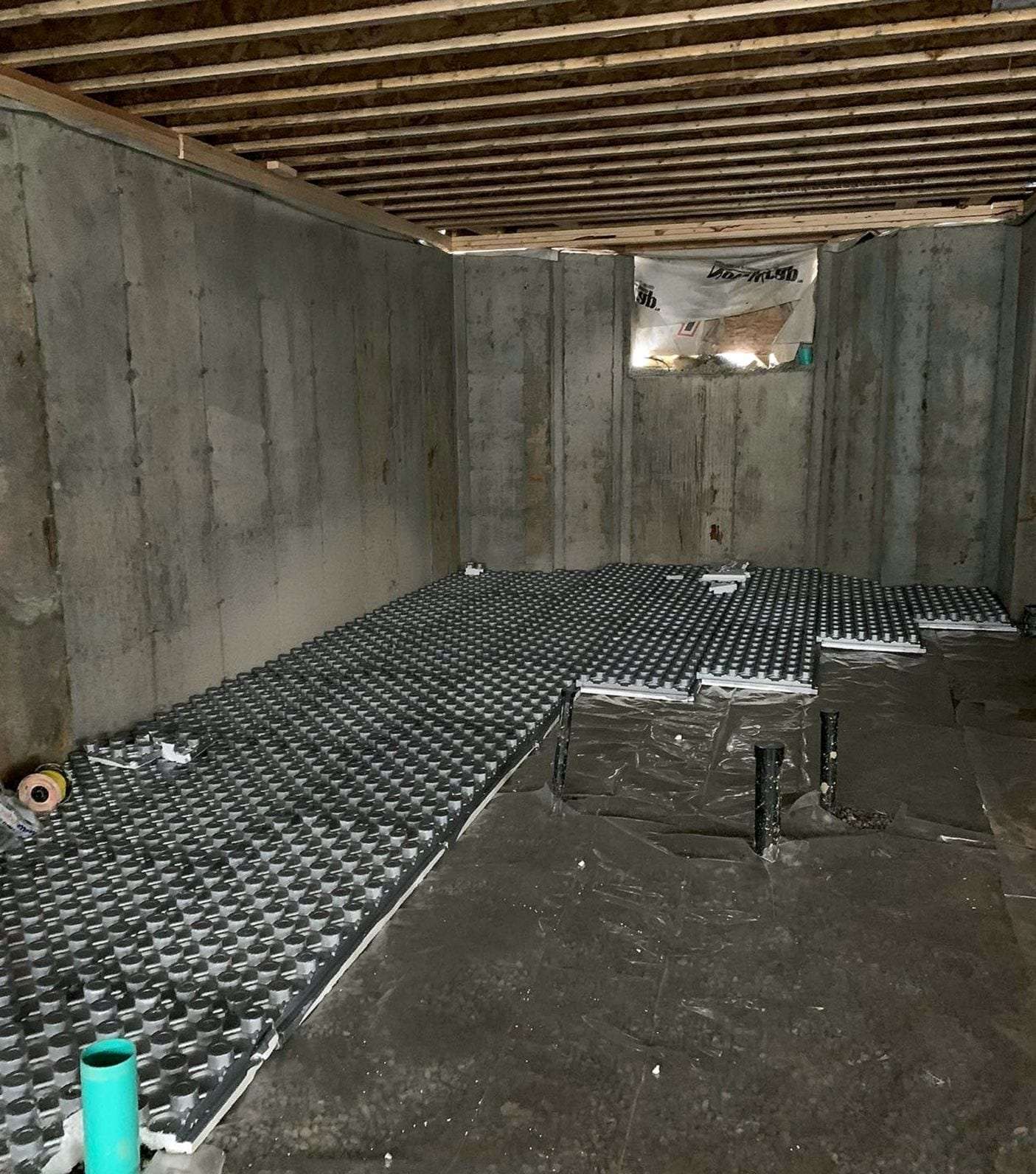
Rough-in work is where inspections matter most. Drain, vent and supply lines in an open wall or under a basement floor are usually inspected before they are covered, because afterward the only way to see them is to open the wall or break the concrete.
| Type of work | Permit usually needed | Who inspects |
|---|---|---|
| Clearing a clogged drain or sewer line | No: clearing a stoppage counts as repair work | No inspection |
| Fixing a leak, or swapping a faucet, toilet or sink in the same spot | Often not, though some departments ask for one | Usually nobody, unless a permit was issued |
| Replacing a water heater | Usually yes; a gas heater may also need a mechanical permit for the gas line and venting | The plumbing inspector, and the mechanical inspector for gas work |
| Repairing or replacing a sewer lateral | Yes, as a rule; digging in the street can need a separate permit | The building department, often with the sewer utility at the connection to the main |
| Remodel rough-in: new or moved drains, vents and supply lines | Yes | The plumbing inspector, at rough-in before the walls close and again at the end |
| A backflow preventer for a lawn sprinkler system | Usually yes | The plumbing inspector; the water utility may also require regular testing |
Permits, Inspections and Selling a House
When does plumbing work need a permit?
In general, new work and changes to the system need one: new or moved drains and supply lines, a water heater replacement, sewer line repairs and remodel rough-in. Clearing a clog, fixing a leak or replacing a worn cartridge usually does not. The local building department has the final word, so ask before the work starts.
Who applies for the permit, the plumber or the homeowner?
Usually the plumbing contractor doing the work applies for it and meets the inspector. Michigan also lets homeowners take out a permit for some work on the house they live in, but what that covers varies, so ask the building department first.
Why does unpermitted plumbing work cause trouble when selling a house?
A buyer’s inspector may notice work that does not look original, and the buyer or the lender can ask for proof that it was permitted and inspected. Without a permit on file, the seller may have to apply for one after the fact, open walls or floors for an inspector, and bring the work up to code before closing. An insurer can also question a claim tied to work done without a permit.
Safety Around Water, Gas and Sewer Lines
A few situations around plumbing are dangerous rather than just messy, and a few parts of the system exist to keep them from becoming so.
- Know your main shutoff. It is usually beside the water meter, where the water line enters the basement. Make sure it turns, and show everyone in the house where it is.
- A gas smell means leave. Get everyone out without switching lights or appliances on or off, and call the gas utility or 911 from outside. Sewer gas can smell much the same; if you cannot tell which it is, treat it as gas.
- Keep electricity away from standing water. If water has reached outlets, cords, a furnace or a water heater, stay out of it until the power to that area is off, and never wade in to reach the panel.
- Notice sewer gas. A sewage smell near a floor drain often means its trap has dried out, and a bucket of water refills it. A smell that stays, or comes with headaches or nausea, calls for fresh air and a plumber.
- Leave the relief valve pipe open. The temperature and pressure relief valve on a water heater has a discharge pipe that should run down to a few inches above the floor or to a drain. Never cap or plug it; water coming out of it means the heater needs attention.
- Protect the water supply from backflow. Outdoor faucets and laundry tub faucets with hose threads should have vacuum breakers, a lawn sprinkler system needs a backflow preventer, and a hose end should never sit in a bucket, a pool or a tub of dirty water.
Start With a Look at the Problem
Book the visit online for work that can wait, or call for water that will not stop.